Article-at-a-Glance
- Smart marketing systems leverage AI and machine learning to automate decision-making processes and optimize campaigns in real-time, providing up to 30% improvement in ROI over traditional approaches.
- True smart marketing platforms integrate data across all channels, creating a unified customer view that enables hyper-personalized experiences without additional manual effort.
- Self-learning capabilities separate genuinely smart systems from merely digital ones, as they continuously improve performance through pattern recognition and predictive analytics.
- Implementing smart marketing technology allows teams to shift from repetitive tasks to strategic initiatives, with automation handling up to 80% of routine marketing operations.
- MarketSmart Solutions has pioneered intelligent marketing systems that adapt to changing consumer behaviors across industries, helping companies stay ahead of market trends.
The Real Meaning of “Smart” in Modern Marketing Systems
The term “smart” has become ubiquitous in marketing technology, but what truly defines intelligence in marketing systems goes far beyond basic automation. In today’s digital landscape, genuine smart marketing systems represent a fundamental shift from rule-based to learning-based technologies that can anticipate, adapt, and optimize without constant human intervention. MarketSmart Solutions has been at the forefront of developing these intelligent platforms that transform how businesses connect with their audiences. The difference between a merely digital system and a truly smart one lies in its ability to not just execute tasks but to understand context, learn from outcomes, and make increasingly sophisticated decisions independently.
Smart marketing systems fundamentally redefine the relationship between marketers and technology. Rather than simply being tools that execute commands, these systems become active partners that augment human creativity with computational power and pattern recognition. They continuously analyze vast amounts of data across channels, identifying trends and opportunities that would be impossible for humans to discover manually. This shift represents the evolution from marketing automation to marketing intelligence—where the technology doesn’t just follow instructions but generates insights and takes initiative based on real-time market conditions.
The transition to smart marketing isn’t merely a technological upgrade but a strategic transformation. Companies implementing truly intelligent systems report not only efficiency gains but fundamental improvements in marketing effectiveness and customer engagement. When marketing systems can learn from every interaction, predict future behaviors, and automatically optimize for desired outcomes, the entire marketing function evolves from a cost center to a precision growth engine. This evolution is why forward-thinking organizations are increasingly viewing smart marketing systems as essential competitive differentiators rather than optional enhancements.
4 Core Features That Define True Marketing Intelligence
What separates genuinely smart marketing systems from their conventional counterparts isn’t just fancy branding—it’s a fundamental difference in capabilities and approach. True marketing intelligence is built on four essential pillars that collectively enable systems to function with minimal human oversight while continuously improving performance. These core features represent the foundational elements that transform ordinary marketing software into strategic assets capable of driving business growth through intelligent automation and optimization.
Advanced Data Integration Across All Channels
At the heart of any smart marketing system lies unparalleled data integration capabilities that create a truly unified view of the customer. Unlike traditional platforms that maintain separate data silos for different channels, intelligent systems seamlessly combine information from websites, social media, email, CRM, point-of-sale systems, and even offline interactions. This comprehensive data integration enables marketers to track the complete customer journey across touchpoints, understanding how behaviors in one channel influence actions in another. The result is a holistic customer profile that reveals patterns and preferences impossible to detect when viewing channels in isolation. For more insights on why a unified system is essential, read about why every business needs a marketing system.
“The difference between a good marketing system and a truly intelligent one is that smart systems don’t just collect data—they connect it. When your email platform knows what happened on your website, which knows what happened in your store, which knows what happened in your app… that’s when marketing becomes genuinely predictive rather than merely reactive.” — Marketing Technology Quarterly, 2023
Advanced integration doesn’t stop at customer data—it extends to operational systems as well. Smart marketing platforms connect with inventory management, supply chain, customer service, and financial systems to ensure marketing decisions reflect business realities. When a promotion is automatically adjusted based on inventory levels, or customer service interactions inform personalization strategies, the marketing system is demonstrating true intelligence. This level of integration creates a nervous system for the entire organization, allowing marketing to respond to business conditions holistically rather than functioning as an isolated department. For more insights, explore the marketing systems every growth-minded local business should use.
AI-Powered Predictive Analytics
The predictive capabilities of smart marketing systems represent perhaps their most transformative advantage over traditional platforms. Where conventional analytics look backward to report what happened, AI-powered predictive models look forward to anticipate what will happen next. These sophisticated algorithms analyze historical patterns across millions of data points to forecast future customer behaviors with remarkable accuracy. Smart systems can predict which customers are likely to churn, which products a specific segment will respond to, and even the optimal timing for different types of communications.
These predictive models don’t simply make educated guesses—they continuously refine their accuracy by comparing predictions against actual outcomes. A truly smart marketing system might initially predict email open rates with 70% accuracy, but through machine learning, it improves to 85% or 90% accuracy over time as it processes more data and identifies previously unrecognized patterns. This self-improving prediction capability becomes particularly powerful when applied to customer lifetime value calculations, allowing businesses to invest acquisition resources more efficiently by targeting prospects with the highest potential long-term value.
The practical applications of predictive analytics extend to content creation and campaign planning as well. Smart systems can forecast which content themes will resonate with specific audience segments before you create them, which channels will deliver the highest engagement for particular messages, and which campaign approaches are likely to outperform others. This predictive intelligence transforms marketing from a reactive to a proactive function, enabling teams to address opportunities and challenges before they fully materialize. For more insights on leveraging smart systems, explore why you need a system rather than just a marketing team.
Automated Decision-Making Capabilities
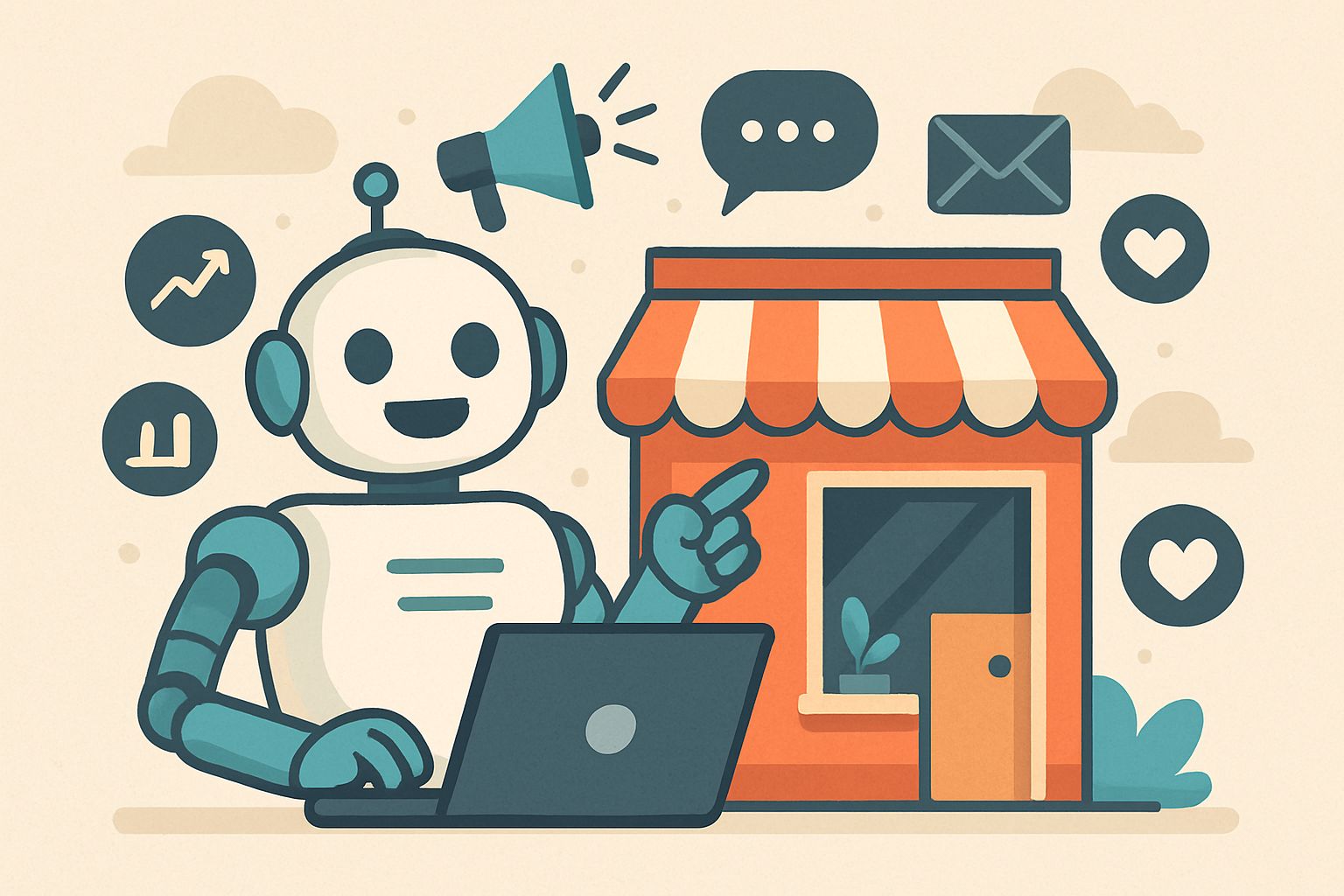
The true power of smart marketing systems lies in their ability to make autonomous decisions without human intervention. While traditional platforms might automate the execution of pre-programmed tasks, intelligent systems can evaluate situations, weigh alternatives, and take independent action based on predefined goals. This capability transforms marketing from a manual discipline requiring constant adjustments to a self-regulating system that optimizes in real-time. For instance, a smart system might automatically reallocate budget from underperforming keywords to high-converting ones, adjust bid strategies based on competitive intelligence, or modify email send times based on individual recipient behavior patterns.
Decision automation extends beyond simple A/B testing to encompass sophisticated multivariate optimization across dozens of variables simultaneously. Rather than testing two subject lines, smart systems can test hundreds of combinations of subject lines, sender names, content blocks, images, CTAs, and send times—identifying winning combinations for specific audience segments automatically. This level of automated decision-making enables personalization at a scale impossible to achieve manually, with some systems making thousands of micro-decisions per second to optimize customer experiences.
The most advanced systems implement decision trees with complex branching logic that creates individualized customer journeys based on real-time behaviors. When a prospect abandons a shopping cart, the system doesn’t just trigger a standard reminder email—it evaluates the customer’s history, purchase patterns, response to previous communications, and current market conditions to determine the optimal response strategy. Should this customer receive a discount, a product recommendation, or simply a reminder? The system decides autonomously, treating each customer as a segment of one.
Self-Learning and Continuous Optimization
What truly separates smart marketing systems from conventional automation is their ability to improve automatically through experience. Traditional platforms require humans to analyze results and implement improvements, while intelligent systems incorporate machine learning algorithms that continuously refine their own performance. These self-learning capabilities mean the system becomes more effective over time without requiring additional human intervention, creating a virtuous cycle of improvement that compounds results.
Self-learning manifests in how these systems optimize content delivery, audience targeting, and campaign strategies. After sending thousands of emails, the system learns which content elements resonate with different personality types, which offers convert at the highest rates for specific segments, and which combinations of touchpoints lead to purchases. It then automatically applies these learnings to future campaigns, continuously testing new approaches against established winners to prevent stagnation.
The most sophisticated systems employ reinforcement learning techniques similar to those used in game-playing AI. They create internal reward systems tied to business objectives, where actions that drive desired outcomes receive positive reinforcement, strengthening those pathways in future decision-making. This capability enables marketing systems to navigate complex, changing environments without explicit programming for every possible scenario—they learn what works through trial and refinement, just as human marketers do, but at exponentially greater speed and scale.
How Smart Marketing Systems Transform Campaign Performance
The implementation of truly intelligent marketing technology doesn’t just incrementally improve existing processes—it fundamentally transforms what’s possible in campaign execution and performance. Organizations that successfully deploy smart marketing systems report not only efficiency gains but breakthrough improvements in engagement metrics, conversion rates, and return on marketing investment. This transformation occurs because smart systems change the fundamental equations of marketing, enabling approaches that would be impossible through manual methods alone.
Real-Time Audience Segmentation Beyond Basic Demographics
Smart marketing systems have revolutionized audience segmentation by moving beyond static demographic categories to dynamic, behavior-based groupings that evolve in real-time. Traditional segmentation might divide audiences by age, gender, or location—factors that poorly predict individual preferences. Intelligent systems, however, continuously classify and reclassify individuals based on thousands of behavioral signals, creating fluid segments that might exist for only moments before reforming as new data arrives. To learn more about how these systems function, you can explore what makes a marketing system smart.
This dynamic segmentation captures the reality that people don’t behave consistently according to demographic profiles. A customer might browse luxury products on payday but seek budget options at month’s end. They might research professional content during work hours but engage with entertainment in evenings. Smart systems recognize these contextual shifts and adapt messaging accordingly, treating the same person differently based on their current behavioral state rather than fixed attributes.
The most advanced platforms employ clustering algorithms that discover naturally occurring segments the marketer might never have identified manually. Rather than forcing customers into predetermined categories, the system identifies patterns of behavior that indicate shared needs or preferences, revealing hidden opportunities for targeted messaging. These machine-discovered segments often outperform traditional marketer-defined segments by 30-50% in engagement metrics, proving that AI can recognize meaningful patterns humans might miss.
Dynamic Content Personalization That Evolves With User Behavior
Personalization in smart marketing systems goes far beyond inserting a customer’s name into an email. These platforms use advanced content assembly engines that dynamically construct individualized experiences from modular components based on the recipient’s complete profile and current context. Every image, headline, product recommendation, and call-to-action can be selected specifically for each recipient at the moment of delivery, creating truly one-to-one marketing at scale.
The intelligence in these systems comes from how they adapt personalization strategies based on user response. If a customer consistently ignores product recommendations but engages with educational content, the system automatically shifts its approach. If emotional appeals resonate better than rational ones for a particular segment, the AI adjusts tone and messaging style accordingly. This closed-loop learning means personalization strategies evolve alongside changing customer preferences, maintaining relevance without manual intervention.
|
Personalization Level |
Traditional Approach |
Smart System Approach |
Performance Difference |
|---|---|---|---|
|
Basic |
Name insertion, simple rules |
Behavioral triggers, predictive timing |
+15-25% engagement |
|
Intermediate |
Segment-based content variations |
Individual-level dynamic assembly |
+30-45% conversion |
|
Advanced |
Multi-variant testing, manual optimization |
Continuous AI learning, autonomous adaptation |
+50-70% lifetime value |
Omnichannel Orchestration Without Manual Intervention
The coordination of marketing efforts across channels represents one of the greatest challenges for traditional marketing teams—and one of the most impressive capabilities of smart systems. While conventional approaches treat each channel as a separate campaign requiring manual synchronization, intelligent platforms automatically orchestrate cohesive customer journeys across touchpoints. This orchestration ensures customers receive consistent but complementary messaging regardless of how they interact with the brand, creating a seamless experience that reinforces key messages without repetition. For more insights, explore the future of local marketing with AI and automation.
Smart orchestration adapts in real-time to customer channel preferences and engagement patterns. If a customer stops opening emails but becomes active on Instagram, the system automatically shifts communication priority to that channel. When a customer shows interest in a product through website browsing, the system might coordinate retargeting ads, an email follow-up, and even trigger notifications to sales representatives in a carefully timed sequence optimized for that customer’s typical purchase pattern.
The most sophisticated systems employ game theory principles to manage channel interactions, understanding how touchpoints influence each other rather than treating them as independent variables. They recognize, for instance, that email effectiveness might increase after social media exposure, or that certain sequences of channel interactions lead to higher conversion probabilities. This cross-channel intelligence enables truly integrated marketing that maximizes the combined impact of all touchpoints rather than optimizing each in isolation.
The Technology Behind Truly Smart Marketing Platforms
Behind every intelligent marketing system lies a sophisticated technology stack that enables its advanced capabilities. Understanding these underlying technologies helps marketers distinguish between platforms that merely claim to be “smart” and those that genuinely deliver intelligent functionality. The technical foundation of true smart marketing systems consists of multiple specialized components working in concert to create a unified intelligence layer for marketing operations.
While the user interfaces of these platforms often appear straightforward, the computational engines powering them represent the culmination of decades of research in artificial intelligence, data science, and computer engineering. This technological sophistication is what enables the system to process vast quantities of data, identify complex patterns, and make thousands of decisions per second without human intervention.
Machine Learning Models That Power Predictive Insights
At the core of every smart marketing system are specialized machine learning models designed to extract predictive insights from marketing data. These algorithms go far beyond simple statistical analysis, employing sophisticated techniques like gradient boosting, deep neural networks, and ensemble methods to identify subtle patterns invisible to human analysts. The most advanced systems utilize multiple specialized models working in parallel, each optimized for specific marketing functions such as churn prediction, conversion likelihood, content affinity, or channel preference.
These machine learning capabilities enable marketing systems to move beyond simple correlations to understand causality—determining not just what happened but why it happened and what is likely to happen next. By analyzing millions of customer interactions, the algorithms can identify which specific elements of a campaign drive desired outcomes for different segments, creating a continuous feedback loop that improves marketing performance over time.
The quality of these predictive models represents perhaps the most significant differentiation between competing platforms. Leading systems employ ensemble techniques that combine multiple algorithms, each approaching the prediction problem from different perspectives to achieve greater accuracy than any single model could provide. This mathematical sophistication translates directly into marketing performance, with the most advanced systems delivering predictive accuracy rates exceeding 85% for complex marketing outcomes.
Natural Language Processing for Content Optimization
Smart marketing systems increasingly incorporate sophisticated natural language processing (NLP) capabilities that enable them to understand, analyze, and even generate marketing content. These NLP components allow the system to evaluate the semantic meaning, emotional tone, readability, and likely performance of content across channels. By analyzing historical content performance against these linguistic dimensions, the system learns which content characteristics resonate with different audience segments.
Advanced NLP functionality enables smart systems to automatically tag content based on themes, sentiments, and complexity levels, creating a self-organizing content library that makes personalization more effective. Some platforms can even recommend specific improvements to existing content based on performance patterns, suggesting headline modifications, tone adjustments, or structural changes likely to improve engagement for targeted segments. For businesses looking to enhance their marketing strategies, understanding the marketing systems every growth-minded local business should use can be invaluable.
The most sophisticated marketing platforms now incorporate generative AI capabilities that can create variations of existing content or even produce entirely new content based on performance patterns. These systems might automatically generate email subject line alternatives, social media caption variations, or product description modifications—all optimized for specific audience segments based on their historical engagement patterns.
APIs and Integration Architecture
The integration capabilities of smart marketing systems represent a critical but often overlooked component of their intelligence. While traditional platforms might offer basic data import/export functions, truly smart systems feature comprehensive API ecosystems that enable real-time bidirectional data flow between the marketing platform and dozens of other business systems. This integration architecture allows the marketing system to incorporate signals from customer service platforms, inventory management systems, website analytics, and even physical store interactions to create a complete view of each customer. For more insights, explore local business marketing automation tools.
Modern smart marketing platforms utilize microservices architectures that decompose marketing functions into specialized services communicating through standardized interfaces. This approach enables the system to process different types of marketing activities in parallel, scaling resources dynamically based on current needs. For instance, during a major product launch, the system might automatically allocate additional computing resources to email delivery, social media monitoring, and website personalization without manual intervention. Learn more about how businesses are streamlining their marketing with these innovative systems.
The most advanced systems employ event-driven architectures where every customer interaction triggers immediate updates across the entire marketing ecosystem. When a customer opens an email, abandons a cart, or engages with social content, that information instantly propagates to all connected systems, enabling real-time response across channels. This architectural approach eliminates the data latency issues that plague traditional marketing stacks, where information might take hours or days to synchronize between systems.
Cloud Computing Infrastructure Requirements
Smart marketing systems leverage cloud computing infrastructure to deliver the massive computational power required for real-time data processing and machine learning at scale. These platforms typically operate on distributed computing environments that can dynamically allocate resources based on current processing needs, ensuring consistent performance even during peak marketing periods. The elastic nature of cloud infrastructure enables these systems to handle sudden spikes in activity—such as during major sales events—without performance degradation.
Data storage architectures in smart marketing systems employ sophisticated approaches like data lakes combined with specialized analytical databases optimized for different query patterns. This hybrid approach allows the system to maintain a complete historical record of all customer interactions while still delivering millisecond response times for personalization decisions. Some platforms even employ edge computing techniques that push decision-making capabilities closer to the customer, enabling personalization to occur with minimal latency.
Security and compliance features represent another critical infrastructure component, with leading platforms implementing end-to-end encryption, granular access controls, and automated compliance monitoring. These capabilities ensure that sensitive customer data remains protected throughout the marketing process, addressing the privacy concerns that often accompany advanced personalization techniques.
Smart vs. Traditional Marketing Systems: A Practical Comparison
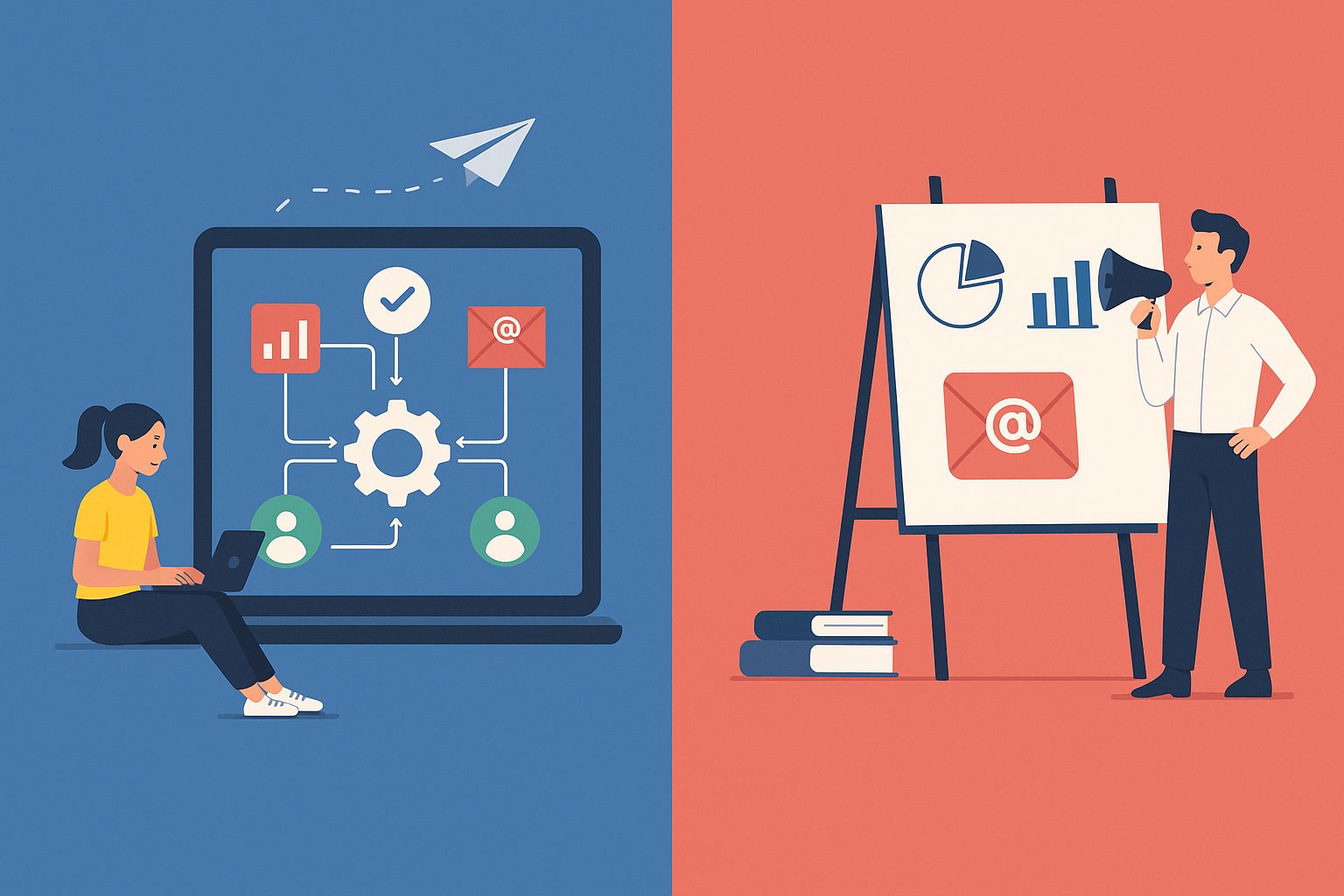
The theoretical benefits of smart marketing systems become most apparent when directly compared to traditional marketing platforms across key operational dimensions. This comparison reveals not just incremental improvements but fundamental transformations in how marketing functions operate. Understanding these practical differences helps organizations anticipate the specific benefits they might realize by upgrading to intelligent marketing technology.
Time Savings: Automation of Repetitive Tasks
Traditional marketing systems might automate basic workflows, but they still require significant human intervention for campaign management, content creation, audience segmentation, and performance analysis. Smart systems, by contrast, automate not just task execution but decision-making itself, reducing the need for constant human oversight. Marketing teams using intelligent platforms report spending 60-80% less time on routine campaign management, allowing them to focus on strategic initiatives rather than operational details.
This time efficiency extends to campaign setup and optimization, where traditional systems require manual configuration of targeting parameters, creative elements, and performance rules. Smart systems can automatically generate these parameters based on campaign objectives and historical performance data, reducing campaign setup time from days to hours or even minutes. The system continuously optimizes these parameters throughout the campaign lifecycle, eliminating the need for manual performance reviews and adjustments.
Perhaps most significantly, smart systems dramatically reduce the analytical burden on marketing teams. Rather than requiring analysts to sift through performance data looking for insights, these platforms automatically identify significant patterns, anomalies, and opportunities, presenting them to marketers in actionable formats. This capability transforms the role of marketing analysts from data processors to strategic advisors, focusing their expertise on implementing insights rather than discovering them. To understand more about how to work smart in marketing, you can explore this discussion on smart marketing strategies.
Precision: Data-Driven Decision Making vs. Gut Instinct
While traditional marketing relies heavily on experience and intuition, smart systems enable purely data-driven decision making at a level of precision impossible to achieve manually. Where human marketers might segment audiences into a handful of broad categories, intelligent systems can create thousands of micro-segments based on behavioral patterns, delivering precisely targeted messaging to each. This granular targeting regularly delivers 25-40% improvements in campaign performance compared to traditional segmentation approaches.
The precision advantage extends to content optimization, where smart systems can identify exactly which elements of a message resonate with specific audience segments. Rather than making educated guesses about which headlines, images, or calls to action will perform best, marketers can rely on AI-driven analysis of thousands of previous interactions to predict performance with remarkable accuracy. This capability transforms creative development from an art to a science, with data informing every aspect of content strategy.
Budget allocation represents another area where precision delivers significant advantages. Traditional approaches typically allocate marketing budgets based on historical performance and marketing intuition, often leading to inefficient spending. Smart systems continuously redistribute budgets across channels, campaigns, and audience segments based on real-time performance data, ensuring every marketing dollar generates maximum return. Organizations implementing intelligent budget optimization routinely report 15-30% improvements in overall marketing ROI without increasing total spending.
“We used to debate for hours about where to allocate our quarterly marketing budget. Now our smart marketing platform redistributes spend daily based on actual performance. Last quarter, this dynamic allocation improved our customer acquisition cost by 24% compared to our previous fixed-budget approach.” — VP of Digital Marketing, Fortune 500 Retailer
Scalability: Handling Multiple Campaigns Without Added Resources
Traditional marketing approaches face significant scalability limitations—each additional campaign, channel, or audience segment requires proportionally more human resources to manage. Smart marketing systems break this linear relationship between marketing activities and required resources, enabling teams to dramatically expand their marketing footprint without corresponding staff increases. Organizations using intelligent platforms report managing 3-5 times more campaigns with the same team size compared to traditional approaches.
This scalability advantage becomes particularly evident in personalization efforts. Creating truly personalized experiences traditionally required creating discrete content variations for each audience segment—a labor-intensive process that limited personalization scope. Smart systems can dynamically assemble personalized content from modular components, automatically selecting the optimal combination for each recipient. This capability enables true one-to-one marketing at scale, with some organizations delivering millions of unique content variations without additional creative resources.
The automation of performance monitoring and optimization further enhances scalability by eliminating the analytical bottlenecks that typically constrain marketing operations. Where traditional approaches might limit the number of concurrent tests due to analysis capacity, smart systems can simultaneously execute and optimize hundreds or thousands of tests across channels, continuously applying insights to improve performance. This capability enables marketing organizations to experiment more aggressively, accelerating the pace of learning and improvement.
ROI Improvements: The Numbers Behind Smart Systems
The business case for smart marketing systems ultimately rests on their ability to deliver measurable improvements in marketing return on investment. Organizations implementing these platforms consistently report significant performance gains across key metrics, with the most advanced implementations achieving 30-50% improvements in overall marketing ROI. These gains stem from multiple factors, including more efficient budget allocation, higher conversion rates through improved targeting, and reduced operational costs through automation.
Customer acquisition costs typically decrease by 15-25% after implementing smart marketing systems, primarily due to improved targeting precision and automated optimization of acquisition channels. At the same time, customer lifetime value often increases by 20-30% as a result of more relevant engagement and personalized experiences throughout the customer journey. This simultaneous improvement in both acquisition efficiency and customer value creates a powerful multiplier effect on marketing ROI.
Beyond these direct performance improvements, smart systems deliver significant operational savings by automating tasks that previously required manual effort. Organizations report reducing campaign management costs by 40-60% after implementing intelligent marketing platforms, while simultaneously increasing campaign volume and complexity. When combined with performance improvements, these operational efficiencies can transform marketing from a cost center to a precision growth engine with clearly demonstrable return on investment.
|
Metric |
Average Improvement |
Leading Implementations |
Primary Drivers |
|---|---|---|---|
|
Overall Marketing ROI |
25-35% |
40-50% |
Budget optimization, targeting precision, operational efficiency |
|
Customer Acquisition Cost |
15-20% reduction |
25-30% reduction |
Channel optimization, predictive targeting, conversion improvement |
|
Customer Lifetime Value |
20-25% increase |
30-40% increase |
Personalized experiences, improved engagement, retention optimization |
|
Campaign Management Efficiency |
40-50% improvement |
60-70% improvement |
Automation of routine tasks, self-optimizing campaigns, simplified workflows |
How to Evaluate a Marketing System’s True Intelligence
As smart marketing technology proliferates, distinguishing truly intelligent systems from those merely adopting the terminology becomes increasingly challenging. Effective evaluation requires looking beyond marketing claims to assess the actual capabilities, architecture, and demonstrated results of potential platforms. This evaluation process should focus on both technical capabilities and practical business outcomes to ensure the selected system delivers genuine intelligence rather than simply automated workflows.
10 Questions to Ask Vendors Before Purchasing
- How does your system learn from marketing performance data? Look for specific machine learning methodologies rather than vague references to “AI” or “algorithms.”
- Can your platform make autonomous decisions without human intervention? Request examples of specific decisions the system can make independently and how these decisions improve over time.
- What integration capabilities does your platform offer? Evaluate the breadth, depth, and real-time nature of available integrations with other marketing and business systems.
- How does your system handle data at scale? Ask about architecture, processing capacity, and performance with large data volumes.
- What specific personalization capabilities does your platform provide? Look beyond basic segmentation to understand how the system creates truly individualized experiences.
- How does your system adapt to changing customer behaviors? Evaluate how quickly the platform identifies and responds to emerging patterns.
- What predictive models does your platform employ? Request information about prediction accuracy rates and how these models improve over time.
- How does your system optimize budget allocation across channels? Look for automated, data-driven approaches rather than manual rules.
- What performance improvements have your customers typically achieved? Ask for specific metrics and case studies demonstrating real-world results.
- How does your platform balance automation with human control? Understand how marketers can guide the system while still benefiting from its intelligence.
Red Flags That Indicate “Smart” Is Just a Marketing Term
Several warning signs can help identify platforms that use “smart” primarily as a marketing term rather than reflecting genuine intelligence. Beware of systems that require extensive manual configuration for each new campaign or channel, as truly intelligent platforms should adapt automatically to new marketing contexts. Similarly, platforms that cannot explain how their algorithms work or what data they use to make decisions may be employing buzzwords rather than actual AI capabilities.
Another common red flag is the absence of continuous learning capabilities. If the system’s rules and models remain static unless manually updated by humans, it lacks the self-improving nature that defines true intelligence. Similarly, platforms that require separate implementations or interfaces for different marketing channels likely lack the integrated intelligence needed for truly smart omnichannel orchestration.
Perhaps the most telling indicator is the inability to demonstrate specific, measurable performance improvements achieved through the platform’s intelligent capabilities. Vendors of genuinely smart systems should be able to provide detailed case studies showing how their technology has improved key marketing metrics across different industries and use cases. Absence of such evidence suggests the “smart” designation may be more aspirational than actual.
Must-Have Features for Different Business Sizes
The specific features that constitute a “must-have” vary significantly based on organization size, marketing complexity, and industry. For small businesses, the priority should be systems that deliver intelligence without requiring dedicated data science resources. Look for platforms with pre-built models designed for common small business use cases, intuitive interfaces that translate complex concepts into actionable recommendations, and automated setup processes that reduce implementation barriers.
Mid-sized organizations typically require more sophisticated capabilities while still maintaining operational efficiency. Priority features include flexible integration options for existing marketing technology, customizable automation workflows that adapt to specific business processes, and scalable architecture that can grow alongside the business. Mid-market companies should also prioritize platforms offering guided analytics that help marketing teams interpret and act on the system’s insights without requiring advanced technical expertise.
Enterprise organizations with complex marketing operations need comprehensive intelligence layers that unify disparate marketing technologies. Must-have features include enterprise-grade security and governance, global scalability, advanced customization capabilities, and sophisticated modeling tools that can address unique business challenges. Large organizations should also prioritize platforms offering both packaged solutions for common use cases and extensibility for proprietary algorithms and data sources. For more insights, explore the marketing systems every growth-minded local business should use.
Implementation Roadmap: Making the Smart Transition
Transitioning to smart marketing technology requires more than simply purchasing and installing new software—it demands a structured approach to technology adoption, organizational change, and capability development. Organizations that successfully implement intelligent marketing systems follow a deliberate roadmap that minimizes disruption while maximizing value realization. This phased approach ensures the technology integrates effectively with existing processes and systems while building the skills needed to leverage its full capabilities.
The implementation journey typically spans 6-12 months for comprehensive deployments, though organizations can realize initial benefits within the first 90 days through properly sequenced initiatives. Successful implementations focus not just on technology deployment but on the broader transformation of marketing operations, ensuring the organization can fully leverage the intelligence capabilities of the new platform.
Step 1: Audit Your Current Marketing Technology Stack
Before implementing any new marketing technology, conduct a comprehensive audit of your existing systems, data sources, and workflows to identify integration requirements, potential redundancies, and capability gaps. Document current marketing processes, noting which activities consume the most time and which deliver suboptimal results—these represent prime opportunities for intelligent automation. Evaluate the quality and accessibility of your marketing data, as smart systems require clean, consolidated data to deliver accurate insights. This audit creates a baseline understanding of your current state and helps identify the specific intelligent capabilities that will deliver the greatest impact for your organization.
Step 2: Identify Integration Requirements and Potential Obstacles
Smart marketing systems deliver maximum value when they connect seamlessly with your broader technology ecosystem. Map the data flows required between your existing systems and the new platform, identifying potential integration challenges such as proprietary data formats, API limitations, or security constraints. Evaluate whether your current data collection practices capture the information needed to power intelligent marketing decisions, particularly behavioral data that enables predictive modeling.
Technical integration represents only one potential obstacle—organizational readiness presents equally important considerations. Assess your team’s current analytical capabilities and identify any skill gaps that might limit their ability to leverage advanced marketing intelligence. Evaluate how current workflows and responsibilities will need to evolve as routine tasks become automated and focus shifts to strategic activities.
Security and compliance requirements constitute another critical consideration, particularly for organizations in regulated industries. Document your data governance policies and privacy requirements, ensuring the selected platform can maintain compliance while still delivering intelligent functionality. Identify any regulatory constraints that might limit data usage for certain types of predictive modeling or automated decision-making.
- Common Integration Points: CRM systems, e-commerce platforms, content management systems, analytics tools, customer service platforms, loyalty programs, inventory/ERP systems
- Typical Data Requirements: Customer profiles, transaction history, engagement metrics, behavioral signals, content performance, conversion events, support interactions
- Potential Technical Obstacles: Data silos, inconsistent identifiers, batch vs. real-time updates, limited API access, legacy system constraints
- Organizational Considerations: Digital skills gaps, change management needs, process reengineering requirements, cross-functional alignment
Step 3: Develop a Phased Adoption Strategy
“The most successful smart marketing implementations start small, demonstrate value quickly, and expand methodically. Organizations that attempt to transform everything simultaneously typically encounter resistance, technical challenges, and delayed results. A crawl-walk-run approach delivers faster time-to-value while building organizational confidence in the new capabilities.” — Chief Digital Officer, Global Consumer Goods Company
Rather than attempting a complete marketing transformation in one step, develop a phased implementation plan that delivers incremental value while building toward your complete vision. Begin with high-impact, low-complexity use cases that demonstrate tangible results quickly, creating momentum for broader adoption. For many organizations, email marketing personalization or digital advertising optimization represent ideal starting points, as they offer immediate performance improvements with relatively straightforward implementation requirements.
Sequence subsequent phases based on a combination of business impact, implementation complexity, and dependencies between capabilities. For instance, advanced customer journey orchestration typically requires prior implementation of cross-channel data integration and audience segmentation capabilities. Document clear success metrics for each phase, ensuring you can demonstrate concrete value to stakeholders throughout the implementation journey.
Your adoption strategy should address not just technology deployment but the accompanying process changes, training requirements, and organizational adjustments. For each phase, identify which teams will be affected, how their workflows will change, and what support they’ll need to adapt successfully. Include explicit knowledge transfer activities that build your team’s capabilities around the new technology, reducing dependence on external implementation partners over time.
Step 4: Train Your Team for the AI-Augmented Marketing Era
Implementing smart marketing technology fundamentally changes how marketing teams operate, requiring new skills, mindsets, and working relationships. Develop comprehensive training programs that help your team transition from manual campaign management to AI-augmented marketing, focusing not just on technical platform skills but on how to collaborate effectively with intelligent systems. This training should emphasize that AI augments rather than replaces human marketers, shifting their focus from routine execution to strategic guidance and creative development.
Beyond formal training, create ongoing learning opportunities through communities of practice, knowledge sharing sessions, and direct collaboration with your technology partners. Identify early adopters within your team who can serve as internal champions, helping peers understand and embrace the new capabilities. Consider establishing center of excellence models that concentrate expertise around key intelligent marketing functions while disseminating knowledge throughout the broader organization.
The most successful organizations pair technology implementation with career development pathways that reward mastery of intelligent marketing capabilities. Create clear progression models that recognize skills in areas like data-driven decision making, marketing technology orchestration, and AI-augmented campaign development. This approach ensures your team views the transition not as a threat but as an opportunity for professional growth and increased impact.
Future-Proof Your Marketing: Where Smart Systems Are Heading
“The next generation of marketing intelligence will shift from reactive to truly anticipatory—not just responding to customer behaviors but anticipating needs before customers themselves are conscious of them. This predictive intelligence will compress the entire customer journey, enabling brands to deliver solutions at precisely the moment of emerging need.” — Marketing Technology Forecast, 2023
Smart marketing systems continue to evolve rapidly, with several emerging trends poised to further transform marketing capabilities in the coming years. Understanding these future directions helps organizations make forward-looking technology decisions that position them for long-term success rather than short-term tactical improvements. The most significant developments center around increased autonomy, deeper personalization, and more sophisticated predictive capabilities.
Generative AI represents perhaps the most transformative emerging capability, with advanced systems beginning to autonomously create marketing content based on performance data and brand guidelines. Future platforms will likely generate entire campaigns from high-level objectives, producing everything from email copy and social media posts to visual assets and video scripts optimized for specific audience segments. This capability will dramatically accelerate content production while maintaining consistent performance across growing channel ecosystems. For more insights, explore how to work smart in marketing.
Ambient intelligence—the ability to seamlessly deliver relevant experiences across an expanding universe of touchpoints—represents another frontier for smart marketing. As connected devices proliferate throughout physical and digital environments, marketing systems will orchestrate consistent but contextually appropriate interactions across websites, mobile apps, voice assistants, connected vehicles, smart home devices, and emerging metaverse environments. This ambient marketing capability will blur the distinction between digital and physical experiences, creating truly omnichannel customer journeys.
Frequently Asked Questions
As organizations explore smart marketing systems, several common questions arise regarding implementation, operation, and expected outcomes. These questions reflect legitimate concerns about adopting sophisticated marketing technology and deserve thoughtful, nuanced responses that address both the opportunities and challenges involved.
The answers below reflect current industry benchmarks and best practices, though specific situations may vary based on organization size, industry context, and existing technology infrastructure. Organizations should use these general guidelines while conducting their own detailed analysis based on their unique requirements and constraints.
How much does a smart marketing system typically cost compared to traditional solutions?
Smart marketing systems typically require 15-30% higher initial investment than traditional platforms, with enterprise implementations ranging from $100,000 to $500,000+ annually depending on scope, complexity, and user count. However, this premium is generally offset by efficiency gains, performance improvements, and reduced need for supporting technologies. Organizations typically achieve positive ROI within 6-12 months through a combination of operational savings (reduced manual effort) and performance improvements (higher conversion rates, improved customer retention). When evaluating costs, consider not just licensing fees but implementation services, integration requirements, ongoing support, and internal resource needs to fully leverage the platform’s capabilities.
Do smart marketing systems require specialized technical staff to operate?
While early AI marketing platforms often required data scientists to build and maintain models, modern smart systems have dramatically reduced technical barriers through intuitive interfaces, pre-built models, and guided workflows. Most marketing teams can effectively operate these platforms with minimal technical expertise, though organizations typically benefit from having at least one marketing technology specialist who understands the underlying concepts and can serve as an internal expert. The most successful implementations pair marketing domain experts (who understand customer needs and business objectives) with technical facilitators (who help translate those needs into platform capabilities), creating cross-functional teams that maximize the technology’s impact. For more insights, explore our guide on marketing systems.
How long does it take to see ROI after implementing a smart marketing system?
Organizations typically begin seeing measurable performance improvements within 60-90 days of implementation, with full ROI realization occurring within 6-12 months for most deployments. This timeline varies based on implementation approach, with phased adoptions often delivering faster initial returns by focusing on high-impact use cases first. The learning nature of intelligent systems means performance typically improves over time as the system accumulates data and refines its models, creating a compounding return pattern rather than a one-time improvement. Organizations that establish clear baseline metrics before implementation and implement rigorous measurement frameworks can track this progressive improvement and quantify the system’s growing impact.
Can small businesses benefit from smart marketing systems or are they only for enterprises?
Smart marketing systems increasingly offer tailored solutions for organizations of all sizes, with many vendors providing scaled-down versions specifically designed for small business needs and budgets. These SMB-focused platforms typically offer pre-configured templates, simplified interfaces, and automated setup processes that reduce implementation complexity while still delivering core intelligent capabilities. For small businesses, the most accessible entry points often include email marketing personalization, social media optimization, and digital advertising management, where intelligent automation can deliver significant performance improvements without requiring extensive technical resources.
The benefit equation for small businesses often centers around time efficiency rather than handling massive scale—intelligent automation allows small marketing teams to execute sophisticated, personalized campaigns that would otherwise be impossible with limited resources. Cloud-based delivery models have further democratized access to these technologies by eliminating infrastructure requirements and offering consumption-based pricing that scales with business growth.
Many vendors now offer tiered solutions that allow small businesses to start with essential intelligent capabilities and expand functionality as their needs evolve and their comfort with the technology increases. This progressive adoption approach enables even resource-constrained organizations to begin their journey toward marketing intelligence without overwhelming initial investments.
What data privacy concerns should I be aware of when using AI-powered marketing systems?
As marketing systems become more intelligent and personalization more precise, privacy considerations become increasingly important. Ensure your chosen platform provides robust governance controls that enable compliance with relevant regulations like GDPR, CCPA, and emerging privacy frameworks. Look for systems that implement privacy-by-design principles, including granular consent management, data minimization capabilities, and transparent processing practices that can be clearly communicated to customers.
The most advanced platforms now incorporate privacy-enhancing technologies that enable intelligent personalization while minimizing privacy risks. These include federated learning approaches that derive insights without centralizing sensitive data, differential privacy techniques that add noise to individual records while maintaining aggregate accuracy, and advanced anonymization methods that prevent re-identification of individuals while preserving analytical utility.
Beyond technical capabilities, develop clear policies governing how AI systems use customer data, ensuring these policies align with both regulatory requirements and customer expectations. Be particularly cautious with inferred attributes—characteristics the system predicts rather than directly observes—as these can raise complex ethical questions even when technically compliant with privacy regulations. Transparency with customers about how their data informs personalized experiences builds trust and reduces privacy concerns, creating a foundation for responsible use of marketing intelligence.
As regulatory frameworks continue to evolve, maintain close collaboration between marketing, legal, and data governance teams to ensure your intelligent marketing practices remain compliant. The most successful organizations view privacy not as a constraint but as a design parameter that guides responsible innovation, building customer trust while still delivering personalized experiences.
MarketSmart Solutions has pioneered advanced marketing intelligence platforms that deliver all the benefits discussed in this article while maintaining strict data privacy standards. Our systems help organizations of all sizes implement truly smart marketing capabilities that drive measurable business results.
Smart marketing systems are designed to streamline and automate various marketing processes, enabling businesses to reach their target audience more effectively. These systems often incorporate advanced analytics and data-driven insights to optimize campaigns and improve ROI. By leveraging technology, businesses can focus on strategy and creativity rather than getting bogged down in manual tasks. For a deeper understanding of how these systems can benefit your business, check out why you need a marketing system.




Leave a Reply